Tuesday, June 3, 2014

WWDC 2014 FIRST IMPRESSIONS: Ios8 aka Android 4.X.X

It's wwdc2014 where apple gives it's fans a sneak peak of what they've got underneath their sleeves. As every year passes all i can see is android dolls deeply integrated as a custom skin called ios. Though apple fans would cold heartedly disagree, that's the jaw dropping truth.

My fist impression on Ios8 was "meh". Second was "what the fish". Well one thing is for sure. Apple dropped all its trails on Google to thin air and I regret for not guessing out the obvious about ios. "It's not what Steve Jobs would have done" may claim some fans but this is not the time for hypothetical situations. Copying isn't wrong as long as you claim it to be. We call it sharing and apple calls it copying. When they bring in new features I don't understand how one can blindly and proudly say it's an unique feature. Apple you do know that you're still on plant earth don't you?. Accept who inspires you and follow them. Ego kills every good think that can happen. An outstanding example is apple maps which apple replaced it for Google maps and removed Google maps from its app store and we all know what happened.

I understand bringing new features aka android features or freedom to an ecosystem is important so is keeping quiet about childish patents when the claimer actually copies.

My words for ios8 is "WELCOME TO ANDROID B**CHES". "Ok Google = hello siri"

IOS(8)=》IOS (GOOGLE)

Friday, April 11, 2014

Samsung Galaxy S5 unboxing and first impressions

Come join me and Sabareesh as we unbox the long awaited Samsung Galaxy S5 and give our impressions on Samsung's 5th Generation Galaxy S
https://plus.google.com/hangouts/_/hoaevent/AP36tYfuNgT81u64eRDOL02cAvgBOotnA5uU3T5SAIGjYnzWzlYEUA?authuser=0&hl=en

UPDATE : Galaxy S5: the most hated delight?

We all know that the next big thing was unveiled a month back at MWC 2014. To my and everyone's surprise the device was not what we all wanted it to be. Basically we need to understand that Samsung hasn't made a bad device, the rumours made it. I don't know how many of you saw a leaked box cover of a samsung device which got leaked prior to release. The specs was a 5.25" QHD ( there's a huge difference between qHD and QHD and if you're not familiar its better to use 2K) resolution. 20.7 MP camera, a solid 3000 mAH battery and 3GB of ram.


This is what everyone wanted to see when Samsung was saying "THIS IS GALAXY S5" and when it didn't we all hated Samsung for that. It was not just me but most of the reviewers who were present there were not happy. But later when they got to have a hands on the device everything just changed. Most of them were praising the device for how it has evolved. From the moment the galaxy s5 was unveiled i told +Mathew Poynter that am going to get one and he was saying as i quote was "am disappointed man. This not what i expected". I was sure the galaxy s5 is the one am going to get anyway because i had the chance to realise the betterment of the device in mean time people weren't over the shock of the unexpected specs sheet samung gave in.

There is always two sides for a coin. Yes the galaxy S5 isn't everything that were rumoured to be but its everything a average consumer would want. what is that? you would ask and its as simple as "running with no issues out of the box". Every time Samsung made their breakthrough technologies invested on every galaxy device we always faced issues. Ever since the galaxy S. The galaxy S was an icon of a android devices. Still the issues were pestering the consumers. When the galaxy S2 came out it had issues with the new super AMOLED+ screen and that was one among the first phones to sport a dual core processor home made branding (exynos). The phone was state of the art at hardware thus was good at everything (theoretically) but lacked proper colour reproduction, blue tint to the top corner of the screen, low battery life, poor audio and so on. The galaxy s3 came out and it sported a quad core processor and it had a HD AMOLED technology which they switched back to the super AMOLED and not the same super AMOLED+ used on the galaxy S2. Though it was the hottest selling phone for Samsung till date, its still not the phone where everything is ok. Samsung did not stop there and when the galaxy S4 came out it was an octa core phone with FHD super AMOLED technology and that's where the screen issues mostly were addressed and finally improved drastically. No one knows what would have happened if Samsung's galaxy S5 would have had a QHD display. Why do we need QHD on a phone with the pixel density already super-passing the mark of 320?. We did see the OPPO FIND 7 and we did come to know how much the QHD made the phone compromise on display quality and performance.


Well to anyone's knowledge this is the first time Samsung created a opportunity for itself to fixed all the issues it had carried out till date for all these years. The FHD super AMOLED on the galaxy S5 is one of the best displays out there and this is not just told by me but by the experts from Display mate. It has the Brightest screen every made on an AMOLED and the dimmest too. It has an awesome fluid, well and beautifully polished UX and came out with the least gimmicks ( e.g.heart rate monitor).  They've fill in so many wonderful features into the phone like the ultra power saving mode. It has one of the deepest speakers any galaxy device has ever sported thus making the sound more punchy where its needed and loud enough as well (don't compare with boom sound). To be frank the galaxy S phones were never good with audio quality and to my surprise the galaxy S5 was awesome with its output in ears. The music player has more features that are very useful and the camera is a stellar. If you knew this or not the galaxy S phones always borrowed their camera technology from Sony. For the first time Samsung has implemented its very own sensor which is called ISOCELL. They are not just on papers feels sound  but practically does. Its one of the best cameras you can get on an android device. So being a iterative update over its predecessor isn't a  bad thing. I got the chance to use the galaxy S5 and am not getting into more details about the device because i will be getting my Brand new galaxy S5 tomorrow and the unboxing and walk-through sessions will be live broadcast on youtube along with +Mathew Poynter  on the boat. The galaxy S5 is one of the best phones in its class and i would recommend for one over any other manufacture not because you would am a Samsung fan but to know why and to get your doubts cleared stay tuned for tomorrow. The broadcast time will be posted tomorrow at GMT ASAP i receive my package. keep a check on Samsung Galaxy page on facebook.

UPDATE : The galaxy s5 unboxing and the walkthrough tour will commence by 5 pm GMT or 6 hours from now.  The link will go live 5 minutes before the broadcast starts.
   

Friday, September 27, 2013

Samsung's region SIM lock policy on phones- the most absurd thing ever?


So it recently has been discovered that Samsung has implemented a new policy with its mobile phones requiring the devices to be locked to a specific region and only SIM cards from those regions can be used in those devices. A few people who have purchased the Galaxy Note 3 have noticed the folowing labels on the boxes that their phones came in.

Unfortunately what this means is that if you purchase a Samsung device in say Europe you can not use SIM cards from carriers outside that region. Samsung Germany has apparently already responded to this issue stating it effects all phones sold after July 2013 and is applied to Galaxy S2, S3, S4, Note 2 and 3 models. 

While the geographic regions are quite large with Europe covering all of Europe and the American region covering Canada, the U.S, Mexico and all of Latin and South America this means that purchasing a phone from another region to use outside that region won't work. 

Samsung will allow the device to be unlocked to be used in a different region if its brought to one of their service centers for free but thats not the point here. Currently none of the other OEMs (BlackBerry, HTC, LG, Motorola, Apple, etc) have any similar policies on the purchase of their phones. 

What exactly is Samsung attempting to do with this policy? Are they trying to control the market of international devices being sold globally or is this Samsung's way of forcing customers to purchase devices from their specific area. In the case of the Galaxy S4 and Note 3 depending on which area or country you live in determines which version of those devices you get. In the case of the Galaxy S4, there are three versions of that phone; one with a Snapdragon 600, one with a Exynos 5 Octa processor and in some markets a LTE-Advanced model with a Snapdragon 800 chipset. Depending on your market you get one of the three versions of that phone. The Same applies for the just announced Galaxy Note 3 as currently there are two versions; one with the Exynos 5 Octa and one with a Snapdragon 800. 

As of right now XDA is unsure of if this region lock can be cracked without Samsung because its completely different from a SIM lock some carriers put on phones. You can view the XDA thread here http://forum.xda-developers.com/showthread.php?p=45908977#post45908977

I personally have been a huge fan of Samsung and have owned numerous phones, a tablet and heck im writing this post using a Samsung laptop but hearing news of this region lock has made me reconsider my thoughts on Samsung. They are a great company, offer amazing products but as of lately ever since they decided to have 3 CEOs running their corporate end of things they have made a ton of bad decisions that have hurt them. Galaxy S4 sales have not been that strong due to the fact Samsung offers multiple versions of it, they lost a considerable amount of money this year when market annalists downgraded the value of the company due to potential weak sales. I just don't get why Samsung would enforce such a ludicrous policy on their phones. Just yesterday I had checked out the Galaxy Note 3 and considered buying it but after learning of this policy im not sure if I want to. I have reached out to Samsung for a comment on this ridiculous policy and ill provide an update if I get an answer. ~Mathew  

UPDATE: Android Central discovered Samsung's region lock policy isn't as bad as everyone originally thought. While the devices are locked to a specific region once they are activated with a valid SIM card from that region the lock is released. 
Samsung has also released a statement about the controversial policy. 

"In order to provide customers with the optimal mobile experience in each region including customer care services, Samsung has incorporated the ‘regional SIM lock’ feature into Galaxy Note 3 devices. The product is only compatible with a SIM-card issued from a mobile operator within the region identified on the sticker of the product package. When the device is activated with a SIM card issued from the other region, the device may be automatically locked until it is released at the dedicated service centre.Once a device is activated normally, the regional SIM lock is automatically released. Users can enjoy the roaming service as usual and can use other region’s SIM card when travelling. The regional SIM lock has been applied to the Galaxy Note II and Galaxy S4 devices through a software update in selective markets. The regional SIM lock does NOT affect the device’s features and performance. Users can continue to enjoy all the advanced features of our products."

Wednesday, September 18, 2013

IFA 2013

So this week in Berlin, Germany was IFA, a consumer electronics show that is similar to CES but focuses on products geared towards Europe. This week several key players in the mobile electronics industry revealed new products. In this post we'll take a brief look at these amazing products

First we will start with Samsung, on Wednesday Samsung held its usual IFA Unpacked event where the 3rd generation Galaxy Note smartphone or "Phablet" if you prefer was announced.
Images bellow: Galaxy Note 3 


The Galaxy Note 3 features a 5.7 inch full HD Super AMOLED display, depending on what region you live in either a 1.9 ghz Exynos 5 Octa CPU or a Snapdragon 800 CPU clocked at 2.3 ghz. the device comes with 3GB of RAM and either 32 or 64 GB of onboard storage with an microSD expansion slot. The Note 3 comes with a rear facing 13 megapixel camera that on some versions is capable of recording video in 4K (yes thats right 4K!), it has also a 2 megapixel front facing camera for video chatting. Android 4.3 ships on the device along with Samsung's TouchWiz UI on top of it (which you might like or extremely dislike). The Galaxy Note 3 comes with of course the familiar S Pen but introduces a whole slew of new features and software with it. (ill go more in-depth in a future post)

Galaxy Gear 
So in addition to the Note 3, Samsung announced two other products. One of them is the Galaxy Gear. This is Samsung's first smartwatch and its meant to be a companion for your Galaxy device. At first support for the watch will only be available on the Note 3 but Samsung says that future software updates to the Galaxy S3, S4  and Note 2 will enable support. Non-Samsung phones will also be supported in the future as well. 
Images below: Galaxy Gear 

The Galaxy Gear features a 1.63 inch Super AMOLED display, a single-core 800 mhz processor and 512 mb of RAM.There is a 1.9 megapixel camera in the strap.The Galaxy Gear uses bluetooth 4.0 low energy to pair up with your smartphone and it can display messages, notifications as well as receive and make calls via your phone. The watch also has a small selection of apps that can be downloaded onto it. 

Galaxy Note 10.1 2014 Edition 
The final product Samsung announced during its unpacked event is a brand new version of the Galaxy Note 10.1 inch tablet that was released last year. The new Note 10.1 improves on everything last year's model had to offer. (I used last year's model for several months and I have to commend Samsung on the amazing job they did with the new model because it fixes all of the complaints i had with it.)
Images below: Note 10.1


The Galaxy Note 10.1 2014 Edition comes with a 10.1 inch WQXGA Super Clear LCD display (2560 X 1600) It has a 1.9 ghz Exynos 5 Octa CPU with 3GB of RAM. Android 4.3 ships on board along with TouchWiz. The device has an 8 megapixel rear facing camera with flash and a 2 megapixel camera on the front. Like Samsung's Galaxy Tab 3 line it also has a physical home button and capacitive back and menu buttons for Android controls. Like its smaller brother the Note 3, this device ships with all new S Pen functionality. 

Okay so now to move away from Samsung, lets talk about Sony and the new Xperia  Z1 cameraphone.
Previously known by its code name the Honami, the Xperia Z1 brings the best qualities the Xperia Z and Z Ultra phones have to offer into one device. 
Images below: Xperia Z1 courtesy of PhoneArena 


The Xperia Z1 features a 5 inch full HD display with Sony's TRILUMINOUS screen tech that first appeared on the Z Ultra. It features a 2.2 ghz quad-core Snapdragon 800 CPU with 2GB of RAM and it has 16 gb of internal storage along with a MicroSD card slot. Android 4.2.2 ships with the device along with Sony's UI. The main feature of this phone is its camera. the Z1 features a 20.7 megapixel Exmor RS sensor with a 27mm wide angle lense and F 2.0 Aperture. This phone should be capable of taking some amazing pictures with that camera and oh yeah like the Xperia Z and Z Ultra its waterproof! 

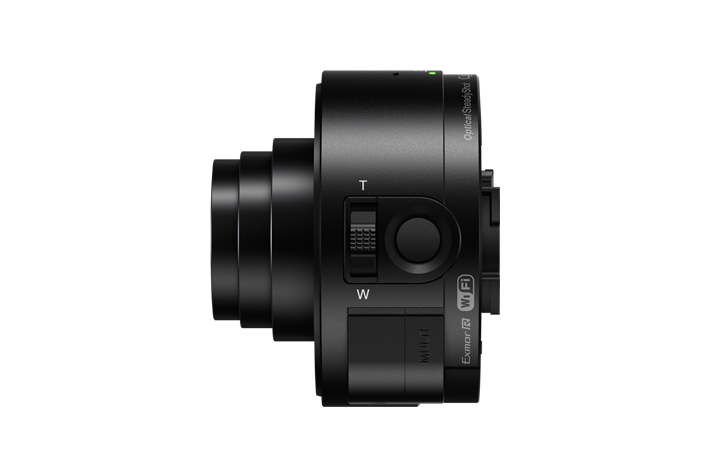
In addition to the Xperia Z1, Sony also introduced two attachable cameras that can be clipped onto any smartphone, giving it the same high quality imaging experience you would find on Sony's cameras. 
The DSC-QX100 Offers Carl Zeiss optics and Sony's amazing imaging technology in a 35 mm 3.6x Optical zoom lens with F1.8 Aperture


The DSC-QX10 comes with a Sony G Lens with 10X Optical Zoom that Sony says should vastly expand your smartphone's potential 

These camera's use Sony's BIONZ imaging processor which Sony promises should deliver accurate color, rich tones with minimal noise 

To move away from Sony, Asus also made several product announcements at IFA 2013. Among the devices where two new FonePads, several tablets and a computer that dual boots Android and Windows 8. ill briefly touch on each 
Fonepad Note 6
This device features a 6 inch full HD display, a Intel Atom Z2580 dual-core CPU with 2GB of RAM and 16GB  or 32GB of internal Storage with a MicroSD card slot. The device also features a 8 megapixel rear camera and a 1.2 megapixel front facing camera. It comes with Android 4.2.2 and has a Stylus much like a device from a competitor I mentioned earlier. 
Image courtesy of PhoneArena 

FonePad 7 
Asus marketed this device as being a Phablet but really its a tablet with phone capability. The device has a 7 inch 1280 x 800 display and runs on the older Intel Z2560 CPU clocked at 1.6 GHZ and it offers less RAM than its 6" brother (the amount is not specified but im going to guess its 1GB) The device ships with Android 4.2 and comes with 8,16, or 32GB of internal storage. It offers a 5 megapixel rear camera and a 1.2 megapixel front camera. The device is intended to be affordable. 
Image courtesy of PhoneArena 
ASUS MeMO Pad 8 & 10 
Asus introduced two affordable tablets, the MeMo Pad 8 and 10. Both of these tablets come with 720P displays, a 1.6 ghz quad-core chipset with 1GB of RAM and Android 4.2. The MeMO Pad 8 comes with 8gb of internal storage and a 5 megapixel rear camera and a 1.2 megapixel front camera. The MeMO Pad 10 comes with 16 gb of storage and only a 2 megapixel rear shooter along with a 1.2 megapixel front shooter. 
Images courtesy of PhoneArena


ASUS Transformer Book Trio 
Of all of the devices ASUS announced at IFA, the most interesting of them was the Transformer Book Trio. The Transformer Book Trio is a device that comes as a tablet with an attachable keyboard dock. The device has a 11.6 inch 1080 x 1920 IPS display and weighs 35.27 ounces. The most interesting feature this device has it dual boots Android and Windows 8. 
Image courtesy of PhoneArena 
Now how the ability to dual boot OSes works is when the device is being used solely as a tablet, its running Android. The tablet itself has a dual-core 1.6 ghz Intel Atom Z2760 processor with 2 gb of RAM. It also comes with a 5 megapixel camera on the rear.  When the device is attached to its keyboard dock it runs a full version of Windows 8. The keyboard dock has its own hardware necessary to run Windows which includes 4GB of RAM and a Intel I7 Haswell processor and 1TB of storrage. The keyboard dock interestingly though can be hooked up to a external display to function as a PC. 

ACER Liquid S2 
Finally the last device i want to touch on that was announced at IFA is the Acer Liquid S2. Acer didnt have a huge presence at IFA but this device caught my attention because like the Galaxy Note 3 it can record video at 4K resolution. The device features Android 4.2.2 with Acer's custom UI running on top of it. Its powered by a 2.2qhz Qualcomm Snapdragon 800 CPU with an Adreno 330 GPU and backed by 2GB of RAM. It has a 13 megapixel rear-facing camera that is capable of recording video at 4K resolution. The device has a 6 inch 1920 x1080 IPS display and a 3300 mah battery. 
Image courtesy of PhoneArena 
So that about wraps up the major product announcements from IFA 2013. Sure there were others but these were the most significant. IFA this year i found to be more interesting than CES was and now we wait till CES 2014. I appologize for the lack of updates to this blog as myself and Sabareesh have been quite busy lately. My next post will be about the Galaxy Note 3 and a indepth look into its features. I may also choose to talk about my thoughts on the Note 3 and the direction Samsung is taking its mobile business. I will try to have that up soon. -Mathew 


Thursday, July 25, 2013

Google announces a new Nexus 7, much better than the original

Today at a special event in California, Google announced Android 4.3 and a revised Nexus 7 tablet. Android boss Sundar Pichai mentioned that one out of two tablets run Android. With the new Nexus 7, its apparent Google is taking the tablet market seriously. The original Nexus 7 was launched last year with mediocre specs. It ran a NVIDIA Tetra 3 processor and had a horribly low resolution display of 1280 x 800. It originally was only offered in 8 GB and 16 GB storage configurations but was later bumped up to 16 and 32 GB configurations.
Fast Forward to 2013 and along comes the New Nexus 7 or Nexus 7 II as some are calling it. The tablet features a 1.5 GHz Qualcomm Snapdragon S4 Pro processor, 2 GB of RAM and has a much, much better screen resolution of 1920 x 1280 pixels. This works out to a PPI rating of about 320, the highest ever on a seven inch tablet.
Powering this amazing tablet is Android 4.3 which yes is still called Jelly Bean. Android 4.3 brings support for Bluetooth 4.0 low energy, which will allow better support for wearable devices like smart watches for example. 4.3 brings support for OpenGL ES 3.0 which should improve graphics performance and Android 4.3 also improves the dialer app to include auto- complete for phone numbers (something Samsung and HTC have had been supporting for years but was omitted from stock Android.) 4.3 also brings added functionality to user accounts on tablets and even improved battery life.
The new Nexus 7 will go on sale in the United States first on July 30th for $229 for the 16 GB model (WiFi) $269 for the 32 GB (WiFi) and $349 for the 32 GB ) LTE model (which will support T-Mobile, AT&T and Verizon). The device will launch in additional markets in the coming weeks after that. It will be available directly from the Google Play Store as well as several retailers.

App review:

Ever been worried about your smartphone or tablet getting stolen or ending up in the wrong hands? I know I have and I'm sure everyone else has as well. Its so easy to misplace a smartphone and if it ends up in the wrong hands, your security and safety could be at risk. To counter this there are several solutions available to remotely manage your device. One of the best ones is called 3CX Mobile Device Manager. They offer apps for both Android and iOS  http://www.mobiledevicemanager.com/blog/ and the app let's you remotely control your device from another smartphone, tablet or PC provided you have a data connection. You can remotely send texts from your device, while its contents as well as lock it and more with just a click of a button. Its a solid built security solution that just works. Its available for free from the Google Play store just search 3CX.

Wednesday, July 3, 2013

SAMAUNG GALAXY S4 AND THE big.LITTLE technology. A story untold

INTRODUCTION:


CPUs are one of the essential parts of any electronic gadgets we find today. They are sometimes clocked from even 50Mhz to 2.3 Ghz in the mobile industry and on the pc market we all heard the AMD announcing the new processors having a maximum clock speed of 5 Ghz which is mind blowing.


The mobile processing is quickly covering up the gap between pc performance and in no time phones will be capable of what an average laptop or pc can do and its not gonna surprise me if its gonna happen next year as we know ARM's A-50 A-57 is on works that supports 64-bit processing. Well lets hold our horses and get back to a not too old iteration and a brand new leap into mobile computing. Yes right from the heading you obviously know am gonna talk about the exynos 5 octa. Whats so special about it that we are looking on to it again? there's a lot happening on it and here i am to discuss a lil more deep about it.

EXYNOS 5 OCTA:

ISSUES:

So far we know exynos octa was the very first processor that has adopted ARM's revolutionary big.LITTLE technology which too far complicated to make it, it has 8 cores of which 4 will be A-7 and the other 4 will be A-15.

The deal about the big.LITTLE is that they only allow 4 cores to work at a time but it can be any 4 of the 8 and on any combination which lead to a better performance boost and also makes battery to last loger. In reality linux kernels wasn't mature enough to spot the difference between a power saving A-7 cortex and the high power processing A-15 thus samsung managed only to make it work in a manner where either 4 A-7 cotex core or 4 A-15 cortex processors could work at a time. It was totally different from what they demonstrated at CES 2013 and everyone including me was totally disappointed about it. I must say that this is a problem with android or any linux based os because all the cpu gpu threading and governing is done by them so only if the kernel has a better understanding on the processors is when you get better performance. As the exynos octa used on the galaxy s4 (GT-I9500) is running android they didn't have better coordination between the kernel and processor as the lack of support of architecture by linux resulted in overheating issues and also affects the software till date in some or the other way.

FIX:

Linux foundation so far has done its best to introduce newer architectures to support as they are big time opensource company so far and they have taken another leap forward to prove it again with adding the support for the big.LITTLE architecture after so much of hard-work on the kernel version 3.10 which is at its final stages on release. Thanks to Linux godfather Linus Torvalds has certified that the official Linux kernel 3.10 is now in its final state; and, as far as our audience is concerned, the big addition to the Linux kernel is with enhanced ARM processor support. Specifically, the Linux kernel 3.10 has added support for big.LITTLE.

 Linux kernel 3.10 is now final -- paving the way for its inclusion in a bevy of Linux distributions, and even offshoots such as Android and Chrome OS. The fresh kernel brings a good number of changes, such as timerless multitasking, a new caching implementation and support for the ARM big.LITTLE architecture. In simplistic terms, the new multitasking method should help improve performance and latency by firing the system timer only once per second -- rather than 1,000 times -- when tasks are running. Meanwhile, users with both traditional hard drives and SSDs will find performance benefits from bcache, which brings writeback caching and a filesystem agnostic approach to leveraging the SSD for caching operations. Also of significance, Linux kernel 3.10 enhances ARM support by including the big.LITTLE architecture, which combines multiple cores of different types -- commonly the Cortex-A7 and Cortex-A15 -- that focus on either power savings or performance. 

CONCLUSSION :

I personally feel that we are yet to see the actually power of the exynos 5 octa and the kernel 3.10 is the right thing to do on updating it to all the devices running it. Samsung was all this time helpless to make people happy with the octa core phone as the kernel didn't support it and now its really a great time to make things right and make its customers happy. I wish samsung brings it up as a stability update for the device like it did previously with a 28Mb updates that always tweaked the kernels than getting it as an update with the newer version of android its too long to wait. I feel once the exynos octa get the 3.10 linux kernel we will surely get 20hrs of battery life on heavy performance and more than 2 days of battery life on a average usage and that's one thing we need the most now. Fingers crossed on hoping samsaung will work on it to straightening thing up for the users. Am really looking forward to it!. Just can't wait. how about you?.

Tuesday, June 11, 2013

GALAXY S4 GT-I9500 SOFTWARE UPDATE


Earlier we hear about the GT-I9505 the qcomm version of the galaxy S4 has been received a software update addressing issues like
-New Camera firmware
-Smearing issue has been fixed (Purple effect while scrolling)
-Smart Pause Toggle
-Move Apps to SD Card
-HDR Video (Can record HDR video)
-Semi-transparent status bar
-New Icons in Settings
-Secure boot status (About Phone)
-Increase legibility (Display) (New feature)

Sadly it wasn't made available for the EXYNOS octa version GT-I9500. It was just 4 days before they said it would come soon to GT-I9500 and here it is finally!.. am really happy to announce that the update is available in india for all the galaxy s4 GT-I9500 users!. All the above mentioned are working just fine!. you can either update your phone via OTA or connect to KIES. Have fun.

Wednesday, May 29, 2013

Reduce lag on any Samsung Galaxy device by going into developer options and limiting background process

Do you have a Samsung Galaxy S4 and are you frustrated with the fact that the smartphone has a considerable amount of lag? 

The Galaxy S4 really is an amazing smartphone with some pretty amazing specifications, as powerful this phone is with 2 gigs of RAM and either a quad-core 1.9ghz Snapdragon 600 CPU or the 1.6ghz Exynos 5 Octa CPU the phone still suffers from lag issues. This is because of Touchwiz mainly, Samsung's skin comes with tons of features that we could spend all day discussing but we wont and it is very resource heavy on the phone. With all of the enhancements and software features, the phone's internal storage is limited and many of these features run simultaneously whether or not if your using them. The phone has 2 gigs of RAM which should help its performance but in this case its not enough as often the user is left with less than 500mb of free RAM due to all of the various features and preloaded programs that run in the background. 

A good way to reduce the lag and increase the performance of your device is to go into the developer  options and limit the number of background processes the CPU can handle at any time. This works on not only the Galaxy S4 but most other Samsung Galaxy devices with the exception of some older models like the Galaxy S. 

To change the background processes count you need to access the developer options menu in the settings which may vary based on device. The Galaxy S4 has a pretty crazy way of accessing the developer options by taping on the device's Android build number multiple times in the about phone section. Most other devices have a section dedicated to developer options in the settings menu. 

Below is a screen cap from the Galaxy Note 10.1  showing the developer options section in the settings menu

Once in developer options, scroll down the Apps tab and select Limit Background processes and change the value from standard limit to 4 at most. 

Clicking on Limit background processes brings up a dialog box where you can change the values, select 4 processes at most as this is probably the best setting. 


After changing the background processes limit, you should notice a significant improvement in the device's performance. On the Galaxy S4, this reduces lag and even fixes the camera bug where clicking on the camera application in some cases can cause the device to malfunction and reboot itself. RAM consumption is also reduced as there are fewer programs running in the background. 

RAM consumption with no limit on background processes, no apps are running

RAM consumption after changing the limit on background processes to 4


As you can see with no applications running and the limit changed to 4, the amount of RAM being consumed by the system was reduced by more than 10 megabites. That might not seem like much but it does make a difference when you are using applications.

As helpful as this is, I should note that these settings when you change them are not permanent, when you restart the device it goes back to the default setting of  no limit. So you will have to change it again. 


Hands on look at Google's new Play Music application

During the Google I/O keynote, Google announced several API updates for its core services. this includes Google Maps, Google+, Play Music and Google Talk. Today I will be giving you a look at the new Play Music app that was announced at I/O. The new app comes with some UI changes but the major new feature is Google now offers a streaming music service. Just like Spotify, Pandora or the other countless music streaming apps, you can create your own music playlists as well as listen to preselected ones. The music streaming service, however, isn't free and requires a monthly subscription fee (although you do get the first 30 days for free if you register before June 30th). Also, the streaming service isn't available in every market unfortunately.

So here is a look at the streaming music service part of the app, you can create your own custom radio stations by typing in the name of a song or artist. The app then builds a station around your search criteria  using similar songs and artists as well.


The streaming service also allows you to search and listen to playlists submitted by other users based on genre  or sub genre. The playlists that are available, however, are limited.


After using the streaming music service for a couple weeks now, I have to say I am quite impressed with it, thanks to this service, you can listen to tracks of new albums that have been released without buying them first which I think is an awesome idea because then you can get a feel for whether or not you want to purchase tracks or the whole album itself. I have noticed though that the music selection is not quite on par with other services, perfect example when I tried to search for Led Zeppelin because they are one of my favorite bands, I couldn't find much content available on that particular artist. I would imagine that in due time, the service will improve as more music is added to the catalog. 

In the end, I think its awesome that Google is offering this service but I do wish there were other pricing options available such as offering maybe a free streaming service but include advertising or skip limits like other services offer. As like any application, it will get better in time as new features may be added. ~Mathew